
 ẮC QUY TIA SÁNG NƯỚC 12V-45AH (NS60)
 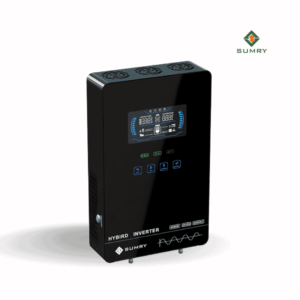 Inverter Hybrid hoà lưới SUMRY 24V-4.5KW (HGX 4.5KW)
  Hệ thống dự phòng điện mặt trời độc lập 1KW
  Hệ Thống Điện Năng Lượng Mặt Trời Hoà Lưới 40050W 3 Pha
 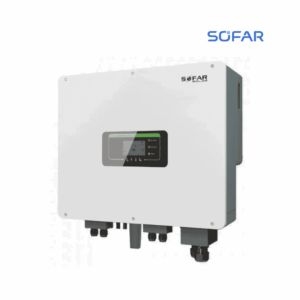 Inverter Hybrid Sofar 15KW 3pha (HYD 15KTL-3PH)
  Ắc quy khô GS 12V-70Ah (80D26R/L)
  Inverter Hòa Lưới Sofar Solar 70000TL-HV
  ẮC QUY TIA SÁNG KHÔ 12V-55AH (MF55559/DIN55L)
  Quạt hút trần Asia V04001
  Quạt lửng Asia A16019
  Nguồn tổ ong 48V - 30A
  Máy nước nóng năng lượng mặt trời 380 lit
  Quạt hút trần Lifan HT20B
  Hệ Thống Điện Năng Lượng Mặt Trời Hoà Lưới 15300W 3 Pha
  Inverter Hòa Lưới Sofar Solar 3000KTLM-G2 (3KW)
  Máy bơm hỏa tiễn 4 inch cánh nhựa VERATTI 4VRM8/15-2.2 3HP









Misconception: Uniswap is just another crypto exchange — the reality behind swaps, pools, and protocol design
23/07/2025 03:03
Many U.S. DeFi users assume Uniswap is little more than a user-friendly storefront for swapping tokens. That framing is useful but incomplete. At its core Uniswap is a set of immutable economic machines—automated market makers (AMMs), routing logic, and layered infrastructure—that change who supplies liquidity, how prices form, and where risk sits. Understanding the mechanisms beneath the “swap” button clarifies trade-offs every trader and liquidity provider should weigh: price efficiency versus capital risk, convenience versus exposure to on‑chain adversaries, and multi‑chain reach versus consistency of user experience.
This article compares three facets of Uniswap that matter most for U.S. traders: (1) the swap experience and routing choices, (2) liquidity provision models and their risks, and (3) architectural design (immutability, Layer‑2s, V4 hooks) that shapes future options. The goal is practical: give you a mental model you can use before you click “confirm” or allocate capital to a pool.

How Uniswap swap works vs. traditional order books: constant product, routing, and MEV mitigation
Common myth: a “best price” shown on Uniswap is identical to a best price on a centralized order‑book exchange. Reality: Uniswap uses the constant product formula (x * y = k) in each pool to set execution prices. That means price impact grows nonlinearly with trade size relative to pool depth; there is no counterparty orderbook to soak up large fills. For traders this has two implications.
First, price impact is predictable from first principles: moving the ratio of reserves moves the marginal price. You can estimate slippage cost mechanically rather than relying on a market maker’s discretion. Second, because many token pairs exist across multiple pools and chains, Uniswap’s Smart Order Router (SOR) will split and route a swap across pools, versions, and even chains to minimize execution cost. That router does heavy lifting for the user, but it also introduces trade-offs: a more complex route can lower price impact but increase gas, cross‑chain bridging risk, or exposure to front‑running unless protected.
Uniswap’s default interfaces mitigate front‑running and sandwich attacks by routing through a private transaction pool (MEV protection) and by offering slippage controls that automatically revert trades exceeding a set tolerance. Slippage controls are an explicit safety mechanism: set them too tight and legitimate volatility will cancel your trade; set them too loose and you accept unseen price movement. In other words, slippage tolerance is a policy parameter you select based on pool depth, expected volatility, and your acceptable execution risk.
Concentrated liquidity, fees, and impermanent loss: comparing LP styles and who they suit
Common myth: providing liquidity on Uniswap is a passive, low‑risk yield alternative to holding assets. Reality: liquidity provision on Uniswap—especially in V3 with concentrated liquidity—amplifies both capital efficiency and exposure to price movement. Concentrated liquidity lets LPs allocate capital within custom price ranges. That improves fee revenue per dollar deployed relative to uniform provisioning, but it also concentrates impermanent loss exposure within the chosen range.
Mechanics matter. If an LP places liquidity narrowly around a tight price band and the market stays there, fee income can outweigh impermanent loss. If the market moves outside that band, the liquidity effectively becomes a long or short position in one token and fee income stops. This trade-off is not speculative fluff; it’s the core economic calculus for LPs. For U.S. users who want yield with controlled risk, the right heuristic is to match range width to expected volatility and desired active management frequency. Broad ranges reduce the need to rebalance but lower fee capture per capital; narrow ranges raise potential returns and increase monitoring requirements.
Another important note: impermanent loss is “impermanent” only in name. If the price never returns to the entry ratio, the loss is permanent relative to a simple hold. That nuance is often misunderstood and leads novice LPs to overestimate the safety of fee compensation.
Architecture and governance: immutable core, V4 hooks, and multi‑chain deployment
Common myth: protocol upgrades mean frequent, unilateral changes to how Uniswap operates. Reality: the core contracts of the Uniswap Protocol are immutable—non‑upgradable by design—reducing systemic risk from governance mistakes or admin key compromises. That immutability constrains flexibility but also increases predictability and auditability for users and auditors.
Where flexibility is needed, Uniswap V4 introduced “hooks”: lightweight extension points that allow pools to run custom logic (dynamic fees, alternative swap maths, oracles) without altering the immutable core. V4 also lowers gas for pool creation and adds native ETH support—practical benefits for traders paying U.S. gas rates on mainnet. Hooks create a controlled path for innovation while keeping the core attack surface small; think of them as vetted plugin slots instead of rewriting the engine.
Multi‑chain support (17+ networks across Ethereum Layer‑2s and other chains) broadens access and lowers per‑swap cost on networks like Optimism, Base, and Unichain (Uniswap’s Layer‑2 optimized for DeFi throughput). But cross‑chain breadth introduces heterogeneity: liquidity fragmentation, differing MEV dynamics, and varying native token standards. For a U.S. trader, that means better price options and cheaper micro‑trades on L2s, but also the operational task of choosing network and bridge strategy carefully.
Flash swaps, arbitrage, and the role of bots: who enforces prices?
Common myth: prices on Uniswap are purely the result of passive supply and demand. Reality: arbitrageurs and flash swaps (borrow without upfront capital in a single transaction) actively enforce price parity between pools and external markets. Flash swaps let traders borrow tokens, perform arbitrage or complex operations, and repay within the same transaction. This mechanism keeps Uniswap prices aligned with broader markets but also creates an operational environment where latency, transaction bundling, and private routing matter.
That environment is why MEV protection and private transaction pools exist: to lower predatory outcomes for regular users. But protection is not absolute—routing through private pools reduces typical sandwich attacks but cannot remove all adversarial possibilities. Users should consider order size, pool depth, and whether to use protected routes especially when trading on volatile pairs.
Practical decision framework for U.S. traders and LPs
To convert the above into a decision-useful heuristic, use this three‑step filter before acting:
1) Define trade objective: small retail swap, large swap, or liquidity provision. Small swaps benefit from L2 execution and SOR routing; large swaps require route simulation and slippage planning. Liquidity provision requires a volatility forecast and a bandwidth estimate for active management.
2) Assess pool liquidity and expected slippage: use pool reserves and the constant product math to estimate marginal price move. If SOR produces multi‑hop, check gas and bridge costs. If the trade spans chains, include bridging delay risks.
3) Choose protections and manage exposure: set slippage tolerance appropriate to pool depth and volatility, consider private routing for MEV protection, and if providing liquidity, choose range width matching your willingness to rebalance versus capital efficiency.
Limits, unresolved issues, and what to watch next
Uniswap is technically mature but not finished. Key unresolved issues include how liquidity will behave across an ever‑larger set of chains (fragmentation risk), how hooks will be used (innovation vs. complexity), and whether MEV protection can scale without centralizing transaction flow. Another ongoing tension is between immutability and the need for rapid security responses: immutable cores reduce attack vectors, but they make emergency fixes harder.
Signals to monitor in the near term: adoption of Unichain and other optimized Layer‑2 networks for retail activity; patterns of concentrated liquidity usage (do LPs increasingly use automated manager strategies?); and the mix of fee tiers across pools as dynamic fees from V4 are trialed. Each of these trends would affect execution cost, capital efficiency, and systemic resilience.
FAQ
Q: If I want minimal execution cost for small trades, which Uniswap option should I use?
A: For small retail swaps, prefer Layer‑2 networks with high throughput and lower gas (e.g., Unichain or other supported L2s) and use the default interface’s Smart Order Router. The router optimizes across pools and versions, but check the gas vs. price trade-off. Also enable MEV protection when available to minimize front‑running risk.
Q: Does providing liquidity on Uniswap guarantee returns greater than simply holding tokens?
A: No. Liquidity provision generates fee revenue but exposes you to impermanent loss. V3 concentrated liquidity can increase returns per capital deployed but raises downside if prices shift outside your range. Treat LPing as an active strategy unless you choose very broad ranges and accept lower fee yield.
Q: How do slippage controls work and what tolerance should I pick?
A: Slippage control sets a maximum tolerated deviation between displayed and executed price; if exceeded the transaction reverts. Reasonable tolerance depends on pool depth and volatility — for liquid pairs 0.1–0.5% may suffice; for thinly traded tokens set wider tolerances or split the trade. If you’re uncertain, simulate trade size against pool reserves to estimate impact.
Q: Are Uniswap contracts safe because they are immutable?
A: Immutability reduces risk of post‑deployment tampering and lowers attack surface for governance hacks, but it is not a substitute for secure code and audits. Bugs in immutable contracts are harder to patch. Uniswap balances this by keeping a small immutable core and adding extensible, reviewable hooks in V4.
For traders and LPs in the U.S., Uniswap is best understood as an ecosystem: swaps, routing, MEV protection, concentrated liquidity, and Layer‑2 choices are interdependent. If you remember one mental model, let it be this: swaps are deterministic math applied to reserves; the better your map of reserve topology (which pools, depths, and networks to touch), the more predictable your costs and risks will be. For a practical starting point and interface options, see the official Uniswap resources at uniswap.